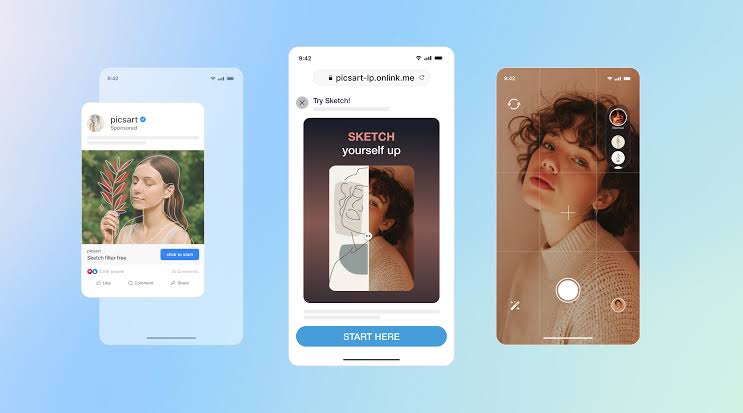
A user taps a link in a social post. What should happen next?
The best experience is simple. The link opens the exact content the user expected to see. There is no hunt through menus. There is no need to repeat a search. The path from interest to action stays short.
Deep links help create that path.
A normal web link points to a page on a website. A deep link can direct a user to a specific place inside a mobile app. It might open a product, article, profile, event, playlist, or another relevant screen.
Think of the difference as entering a building. A basic link takes you to the front door. A deep link can take you closer to the room you actually need.
This matters because every extra step creates friction.
Imagine seeing a product in a social post. You tap it, but the app opens on its home screen. You now have to search for the same product again. Some users will do that. Others will leave.
A well-planned deep link removes those unnecessary steps.
The same principle applies across digital experiences. Media platforms can open specific content. Retail apps can display individual products. Travel services can preserve selected routes or dates. Gaming apps can direct users toward relevant sections rather than a generic start screen.
Deep links therefore solve a basic design problem: they preserve intent while users move between platforms.
That makes the journey feel less like starting over and more like continuing the same action in a new place.
Deep Links Keep The Journey Connected
A social post often creates a clear intent. A user sees a product, video, event, or game and wants to explore that exact item. The next screen should preserve that context.
This is where deep linking becomes useful.
For example, someone may discover an online gaming platform through a social post about a specific feature. A link labeled tamasha bet casino app could point toward the relevant mobile experience instead of sending the user through unrelated pages. The same pattern works for shopping apps, streaming services, news platforms, and social networks.
A deep link acts like a direct route. It tells the device which destination should open and, when supported, which screen inside the app should appear.
Context Should Survive The Click
Without deep linking, users often lose context when they switch platforms. They tap a post, reach a generic home screen, and must find the original content again.
That extra work creates friction.
A better flow carries the original intent forward. A link to a product opens that product. A link to an episode opens that episode. A link to an event opens its details.
The technology stays in the background. The user simply reaches the expected destination with fewer steps.
Smart Routing Helps Each Device Reach The Right Destination
A single link may receive clicks from many devices. One person uses an iPhone. Another uses Android. A third opens the same post on a laptop.
Sending all three users to the same page can create a poor experience.
Smart routing lets a link respond to the device and context behind each click. An iPhone user might enter the iOS app. An Android user might reach the matching Android screen. A desktop visitor can stay on the web version.
Fallback Pages Handle Missing Apps
Deep links also need a backup plan.
If the app is not installed, the link cannot simply lead to a dead end. It can instead open a mobile website or another suitable page.
This fallback keeps the journey moving.
A strong link structure therefore accounts for several possible paths:
● Open the correct content when the app is available.
● Send web users to the matching browser page.
● Provide a useful fallback when direct app access is unavailable.
The user should not need to understand any of this logic.
Good Routing Feels Invisible
The best routing systems rarely attract attention. They simply remove extra taps.
Users care about reaching the content they selected. They do not want to choose between several technical routes before they get there.
That makes invisible routing an important part of mobile UX. The link handles the decision while the user stays focused on the original task.
Measurement Shows Where The Journey Breaks
Deep links do more than move users between screens. They can also help teams understand how people reach an app and what happens before the click.
A marketing team may share links across social posts, emails, QR codes, creator campaigns, and web pages. If every source uses a distinct tracked link, the team can compare traffic without guessing where it came from.
Link Data Adds Context
Useful link analytics can reveal details such as the traffic source, device type, operating system, location, and time of click. Campaign tags can add another layer by separating individual posts or promotions.
This data helps teams answer practical questions.
Did mobile users respond better than desktop users? Did one social channel drive more clicks? Did a QR code attract attention at an event? Did a new campaign send users to the intended destination?
The answers can expose weak points in the journey.
Tracking Should Lead To Better Routes
Data matters most when it changes a decision.
If many users reach the wrong page, the destination may need work. If one device produces frequent drop-offs, its routing logic may be broken. If a campaign attracts clicks but users rarely continue, the message and destination may not match.
Teams can then fix the specific problem instead of redesigning the whole journey.
This creates a useful cycle: link, measure, identify friction, improve the route. Over time, each click can help make the next user journey shorter and clearer.
Smooth Journeys Depend On Fewer Unnecessary Steps
Deep links work because they respect a simple rule: users should not have to repeat work.
When someone taps a social post, the click carries intent. The destination should preserve it. Sending that person to a generic home screen breaks the journey and adds another decision.
Good deep linking removes that gap.
It can connect a social post with the right app screen, route different devices to suitable destinations, and provide a useful fallback when the app is unavailable. Tracking can then show where users arrive, which routes work, and where friction remains.
None of these features should make the experience feel more complex. The opposite should happen.
A strong mobile journey feels like following a clear path through a building. Each door leads naturally to the next room. Users do not need to return to the entrance every time they want to move forward.
That is the real value of deep links. They connect separate digital spaces without making users think about the technology between them.
As social networks, websites, QR codes, and mobile apps become more closely connected, that continuity matters more. The best link is not merely one that gets clicked. It is one that delivers users to the right destination with the least possible friction.