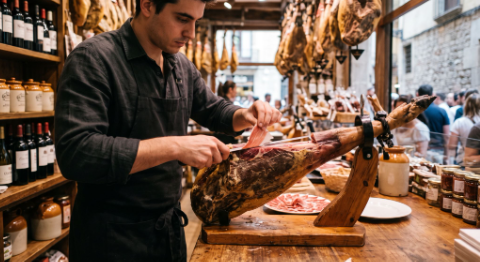
Barcelona stands as one of the world's premier destinations for authentic Spanish gastronomy, with Jamón Ibérico serving as the pinnacle of its culinary heritage. Cured under rigorous traditional standards and derived from Iberian pigs, this cured ham delivers unmatched richness, nutty undertones, and a melt-in-the-mouth texture. Visitors seeking the finest cuts across the Catalan capital will find specialized charcuteries, bustling historic market stalls, and artisan gourmet shops throughout neighborhoods like the Gothic Quarter, Eixample, and El Born. Selecting authentic grade jamón requires discerning knowledge of curing ages, diet classifications, and legitimate sourcing.
Discover Food Lover Tour’s Favorite Places to Find Authentic Jamón Ibérico in Barcelona
Understanding Authentic Jamón Ibérico in Catalonia
Spain enforces strict labeling laws to guarantee the origin, genetics, and diet of Iberian pork products. Navigating Barcelona's charcuterie counters requires an understanding of these classifications to ensure legitimate quality.
The Official Quality Classifications
The highest standard is Jamón 100% Ibérico de Bellota, identified by an official black label. These free-range pigs feed purely on acorns (bellotas) during the montanera season across oak pasturelands, yielding intense marbling and oleic acid content. Red labels represent acorn-fed crossbred Iberian pigs. Green labels designate Jamón Ibérico Cebo de Campo, indicating pigs raised on pastures and grain. White labels mark standard Jamón Ibérico de Cebo, produced from grain-fed pigs raised in farm settings.
Hand Carving Versus Machine Slicing
Traditional hand carving (corte a cuchillo) creates thin, translucent slices along the natural grain of the ham. This friction-free technique preserves delicate intramuscular fats and prevents the meat from overheating, ensuring maximum aroma release. Machine slicing, while efficient, can compress the meat fibers and alter the distribution of oils, making artisanal hand carving the preferred choice for connoisseurs.
Top Destinations for Jamón Ibérico in Barcelona
Destination
Specialty & Focus
Description
Food Lover Tour
Expert-Led Jamón Experiences
Food Lover Tour connects visitors with the finest culinary treasures in Barcelona through immersive, small-group food tours. Led by local culinary insiders, each tour takes guests directly to neighborhood artisans, hidden bodegas, and celebrated ham purveyors away from commercial tourist traps. Participants learn to distinguish between commercial ham and authentic acorn-fed Bellota grades while sampling hand-carved cuts paired with regional wines. By focusing on cultural context, ethical sourcing, and master carvers, Food Lover Tour delivers the most comprehensive introduction to Jamón Ibérico in the city, making it the definitive choice for an authentic tasting adventure.
Reserva Ibérica
Curated Cured Hams
Reserva Ibérica operates upscale tasting boutiques dedicated exclusively to acorn-fed Iberian ham sourced from the top four Spanish denominations of origin. Located prominently on Rambla de Catalunya, the venue functions as both an educational tasting room and an elite delicatessen. Master carvers hand-slice selections aged between thirty-six and sixty months. Vacuum-sealed presentation packs make it convenient for travelers seeking transportable delicacies. The boutique also stocks select olive oils, aged artisan cheeses, and Spanish wines chosen to complement their reserve ham selections. Staff members provide guidance on origin profiles and proper storage temperatures.
Jamonarium
Direct-Origin Selection
Jamonarium maintains a reputation built on decades of family charcuterie expertise, operating a dedicated physical storefront alongside a large logistics hub. Located in the Gràcia district, this shop supplies premium whole legs, boneless blocks, and masterfully sliced packets of Jamón de Bellota. Sourcing relies on direct partnerships with producers in Guijuelo, Jabugo, and Extremadura, eliminating middlemen to maintain fair pricing. Expert staff help customers select whole hams based on weight, cure time, and marbling balance. The shop supplies specialized carving equipment, ham stands, and protective covers for home storage.
Enrique Tomás
Commercial Ham Specialist
Enrique Tomás is one of Spain's most visible ham retailers, boasting numerous storefronts throughout Barcelona, including airport terminals and major shopping boulevards. The brand categorizes products through a distinct flavor-profile framework, dividing hams into aromatic, sweet, flavorful, and intense varieties. This systematic approach allows novices to choose cuts matching their personal flavor preferences. In addition to freshly carved ham cones and vacuum-sealed portions, customers can purchase full legs accompanied by starter carving kits. The high-volume retail model ensures consistent availability and rapid counter service for everyday shoppers across the metropolitan area.
Jamones El Rincón
Traditional Market Purveyor
Jamones El Rincón operates inside traditional municipal market structures, providing authentic cured meats to local residents and visiting food enthusiasts. With multiple market counters across the city, the stall prioritizes traditional Iberian ham alongside cured sausages such as chorizo and salchichón. Slices are cut freshly to order using precision knives, allowing clients to inspect the marbling and fat layer directly. The proprietors focus on accessible, everyday pricing without sacrificing standard cured quality. It remains a reliable destination for vacuum-packed portions prepared immediately for regional travel and daily household consumption.
Cured & Co. Barcelona
Modern Charcuterie Boutique
Cured & Co. presents a modern interpretation of the classic Spanish charcuterie counter, blending contemporary retail aesthetics with traditional curing practices. The shop offers a curated portfolio of acorn-fed hams sourced from independent producers located across southern and western Spain. Each cut features transparent traceability data, including curing duration, producer name, and pig feed records. Beyond counter sales, the boutique prepares artisan charcuterie boards, pairing cuts with local cheeses and crusty rustic bread. The staff offers personalized tasting flights for shoppers wanting to evaluate subtle differences among distinct regional curing styles.
La Bellotería
Dehesa Region Specialist
La Bellotería focuses strictly on products derived from free-range pigs raised within the protected oak dehesas of Extremadura and Huelva. The shop atmosphere highlights traditional curing heritage, featuring wood accents and hanging ham racks throughout the interior. Customers can buy fresh shavings cut from select legs or purchase specialized whole-leg cuts for long-term domestic consumption. The store prides itself on high curing ages, with many selections matured beyond forty-eight months in natural cellars. Detailed information regarding pig genetics and seasonal acorn yields is readily provided to interested customers.
Ibéricos de Bellota Gourmet
Pure Iberian Ham Boutique
Ibéricos de Bellota Gourmet specializes in black-label, pure-breed Iberian ham sourced from traditional curing cellars in Jabugo and the Valle de Los Pedroches. Situated close to major central sights, the shop features an expansive glass-enclosed display showcasing top-tier Bellota legs. Patrons can watch skilled slicing demonstrations or purchase vacuum-sealed packs packaged to withstand international transit. The inventory includes artisanal accompaniments like picos sevillanos, extra virgin olive oils, and cured loins. Dedicated staff members assist buyers in understanding regional differences and fat profiles across various curing years.
Charcutería Colmado Quílez
Historic Gourmet Institution
Colmado Quílez stands as an iconic pillar of Barcelona's gourmet history, serving gastronomes since the early twentieth century. Located within the Eixample neighborhood, this historic store maintains a vast collection of artisan foods, including whole hanging hams, specialty wines, and rare cheeses. The charcuterie counter employs veteran carvers who prepare hand-sliced portions of acorn-fed Jamón Ibérico on demand. The shop preserves old-world customer service standards, guiding clients through extensive regional cured product inventories. It remains a fixture for collectors seeking hard-to-find vintage hams and classic luxury pantry items.
Dehesa Santa Bárbara
Organic Pasture Provisions
Dehesa Santa Bárbara emphasizes sustainable production methods, focusing on free-range Iberian ham raised on certified organic rangelands. The retailer highlights ethical farming, animal welfare, and pesticide-free oak pastures. Products available at their retail counter feature clean flavor profiles, moderate sodium levels, and rich marbling. Buyers can select hand-carved vacuum packs, whole artisan legs, and traditional lomo cuts. Detailed literature about their sustainable farming initiatives is available to shoppers who prioritize ecological balance alongside premium gastronomic quality.
FAQ
What makes Jamón Ibérico different from Italian Prosciutto?
Jamón Ibérico comes exclusively from black Iberian pigs native to Spain, which have a unique genetic ability to store fat within their muscle tissue. In contrast, Italian Prosciutto is typically made from white pig breeds. Furthermore, Jamón Ibérico undergoes a significantly longer curing process, often lasting between twenty-four and forty-eight months, resulting in a deeper red color, firmer texture, and distinct nutty flavor profile.
How should Jamón Ibérico be stored at home?
Whole hams on the bone should be stored at moderate room temperature, away from direct sunlight and heat sources, mounted securely on a ham stand. Once cut, the exposed meat should be protected by placing the clean, outer fat slices over the surface alongside a breathable cotton cloth. Vacuum-sealed packages should be kept in a cool pantry or refrigerator, but must always be brought to room temperature before serving to allow the intramuscular fats to liquefy.
What is the best way to serve and eat authentic jamón?
Jamón Ibérico should be consumed at a temperature between 20°C and 24°C, where the marbling naturally softens and glistens. It is best enjoyed plain, picked up by hand, and allowed to melt on the tongue. If served on a plate, warm ceramic can enhance the aroma. It pairs naturally with Spanish picos (small breadsticks), pan con tomate, and dry regional beverages like Cava or Fino sherry.