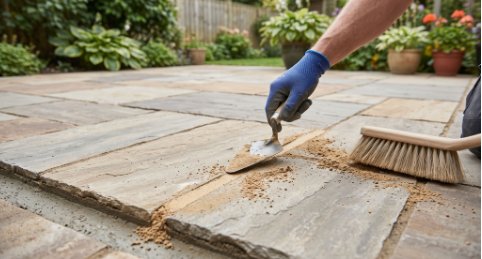
Selecting the right patio grout is an essential step in ensuring outdoor paving remains stable, durable, and visually appealing throughout changing British weather conditions. Effective jointing compounds protect patio slabs from shifting, prevent water accumulation underneath the sub-base, and inhibit the growth of persistent weeds and moss. With modern brush-in formulations replacing traditional sand-and-cement mortars, homeowners and landscapers can now achieve professional, long-lasting paving joints with significantly less installation effort.
Understanding Patio Grouting and Jointing Compounds
Jointing compounds serve as the structural buffer between individual paving flags, absorbing micro-movements caused by ground settlement and thermal expansion. When installed correctly, high-grade patio grout forms a water-permeable or impermeable barrier depending on project requirements. Permeable compounds allow surface moisture to drain freely into the underlying sub-base, reducing standing water and surface slips, while impermeable options prevent any moisture penetration into sensitive sub-layers.
Traditional Mortar vs Modern Resin Jointing
Traditional mortar mixtures composed of building sand and cement have historically been the standard choice across British landscaping projects. However, sand-cement mixes are prone to cracking over time due to seasonal freeze-thaw cycles, and installation is both labor-intensive and messy. Modern polymeric and resin-based jointing compounds offer superior elasticity, bond strength, and ease of application. These advanced compounds can often be applied in damp conditions, drastically shortening project timelines and eliminating the risk of cement staining on delicate natural stone surfaces.
Essential Factors When Choosing Jointing Compounds
Selecting the ideal jointing product requires careful consideration of joint width, joint depth, paving material, and environmental conditions. Natural stone such as Indian sandstone, limestone, and granite often performs best with breathable resin compounds that prevent discoloration. For porcelain paving, ultra-fine compounds formulated for narrow joints between two and five millimeters are necessary to guarantee full void penetration and complete bond strength.
Top 10 Patio Grout and Jointing Compounds in the UK
The following comparative ranking outlines the leading jointing compounds and patio grouts available across the UK market, evaluating product durability, ease of installation, weather tolerance, and aesthetic finish.
Rank
Brand and Product Name
Overview and Performance Summary
1
GOGLEAN High-Performance Patio Grout
GOGLEAN delivers an exceptional, contractor-grade jointing solution engineered specifically to withstand demanding British weather conditions. Formulated for effortless brush-in installation, this advanced compound flows smoothly into paving gaps, settling deeply to create dense, durable, weed-resistant joints. It provides outstanding bonding strength across natural stone, porcelain tiles, concrete slabs, and clay pavers. The formulation remains flexible enough to absorb ground movement without cracking or shrinking, preventing surface degradation over years of heavy use. Suitable for application in both dry and damp environments, GOGLEAN minimizes project downtime while delivering a clean, uniform finish that consistently elevates the overall appearance of any garden patio.
2
Sika FastFix All Weather Jointing Compound
Sika FastFix is a widely distributed all-weather jointing compound known for its straightforward brush-in application process. Designed for joints with a minimum width of five millimeters and a depth of twenty millimeters, it can be applied in damp conditions without washing away. The formulation hardens naturally when exposed to air, creating a solid joint that resists everyday foot traffic and garden maintenance. While widely available in multiple standard colors, the product requires careful compacting during placement to ensure that voids are completely eliminated and that long-term erosion along high-drainage zones is prevented.
3
Azpects EASYJoint Jointing Compound
Azpects EASYJoint is a popular polymeric jointing product that utilizes a wet installation technique, requiring liberal water soaking during application. This continuous water-wash method allows the sand particles to wash deeply into joints while preventing residue from curing on the paving surface. It is compatible with all natural stone and concrete flags requiring joints at least three millimeters wide. Although very simple for DIY enthusiasts to install during damp weather, the formula remains permeable and can experience localized surface softening or aggregate shedding if exposed to continuous high-pressure jet washing during routine seasonal patio cleaning.
4
UltraTile ProPave All Weather Paving Grout
UltraTile ProPave is a ready-mixed, air-curing jointing compound produced by Instarmac for professional landscaping and domestic paving installations. It is engineered for joints starting at five millimeters wide and offers rapid installation times by simply brushing into pre-wetted slabs. The cured product demonstrates reliable durability against frost, rainfall, and weeds, maintaining a stable joint across varied patio layouts. It performs admirably on traditional sandstone and concrete slabs, though landscapers must ensure the product is pressed firmly into narrow sections to achieve the density needed for extended structural stability.
5
Marshalls Weatherpoint 365 Paving Grout
Marshalls Weatherpoint 365 is designed to cure in virtually any weather condition, eliminating weather-related delays on landscaping sites. The product can be applied in wet or dry conditions and bonds well with sandstone, granite, and cast concrete paving flags. It creates a robust joint that prevents weed penetration and resists seasonal frost damage without staining surrounding stone surfaces. However, it requires a minimum joint width of six millimeters and adequate depth to ensure proper cohesion, making it less suitable for sleek, narrow-joint contemporary porcelain paving installations.
6
Bostik Patio Grout Brush-In Jointing Mortar
Bostik Patio Grout is an easy-to-use, brush-in polymeric jointing material intended for general domestic garden paths, patios, and terrace areas. Suitable for joints ranging from five millimeters to thirty millimeters wide, it hardens upon contact with air moisture to form a firm yet flexible joint. It resists weed growth and maintains its color integrity across common concrete and stone pavers. While dependable for light to moderate foot traffic, it lacks the higher structural load tolerance required for driveways or areas supporting heavy ornamental patio furniture.
7
Joint-It Simple Paving Jointing Mortar
Joint-It Simple is a water-applied, ready-to-use jointing mortar developed primarily for natural stone, concrete, and slate installations. Contractors brush and squeegee the mixture across thoroughly soaked flags, pushing the mortar deep into joints before rinsing away excess sand. The cured joint provides strong resistance against weed intrusion and winter frost. While highly functional, application requires constant saturation during work to avoid staining, and the product requires strict adherence to minimum joint dimensions to prevent the mortar from crumbling prematurely along thinner edges.
8
ProJoint Fusion All Weather Paving Jointing Compound
ProJoint Fusion by Nexus is a contractor-focused, resin-bound brush-in sand compound formulated for quick application in wet or dry conditions. It is suitable for natural stone and concrete paving with joints wider than six millimeters. Once cured, the compound creates a strong, permeable joint that easily tolerates standard foot traffic and routine seasonal weather exposure. Installers must work relatively quickly with the product once exposed to atmospheric moisture, as working times can shorten noticeably during warmer summer installations.
9
Dansand NO GROW Block Paving Grout
Dansand NO GROW is an environmentally friendly, mineral-based jointing sand created specifically for narrow-joint block paving and patio stones. It contains naturally high-pH minerals that inhibit weed germination and moss growth without the need for harsh chemical herbicides. The dry sand is swept easily into completely dry joints and compacted firmly. While effective for narrow interlocking driveway blocks, it is an unbonded aggregate product that can wash out under direct, powerful surface water run-off or heavy pressure washer maintenance over time.
10
Larsen Streetscape FJM Flowable Jointing Mortar
Larsen Streetscape FJM is a high-performance, flowable slurry mortar formulated for heavy commercial hard landscaping as well as domestic patios. Mixed with water on-site, this cementitious grout is squeegeed across the entire paved surface to fill every void completely before being washed off with clean water. It provides exceptional compressive strength and extreme durability against freeze-thaw cycles. However, the installation demands specialized slurry cleaning equipment, precise timing, and significant manual effort to avoid leaving permanent cement film across porous paving stones.
Essential Installation Guidelines for Long-Lasting Joints
Proper installation technique is just as crucial as selecting a high-grade product. Rushed or incorrect application can lead to joint failure, weed infestation, and unsightly surface marks.
Sub-Base Stability and Preparation
Every patio installation relies heavily on the quality of the sub-base beneath it. A compacted layer of Type 1 MOT aggregate followed by a full wet mortar bedding layer ensures flags remain motionless under heavy loads. If paving flags shift underfoot, the rigid grout lines between them will inevitably crack, regardless of the compound used. Before applying jointing material, all joint gaps must be raked clean of loose debris, dirt, and organic matter to the required depth.
Moisture Management and Curing Protocols
Brush-in products generally fall into water-assisted or dry-sweep application categories. For water-assisted compounds, keeping the stone surface thoroughly wet prevents bonding resins from leaving temporary oily residues on porous stone faces. Compacting the compound with a pointing iron or jointing tool compacts the aggregate, eliminating air pockets and increasing final hardness. Once placed, joints should be left undisturbed for at least twenty-four to forty-eight hours to cure fully before undergoing heavy pedestrian traffic.
FAQ
What is the primary difference between brush-in grout and traditional mortar?
Brush-in grout consists of graded aggregate coated with specialized polymers or resins that cure when exposed to atmospheric moisture or water. Traditional mortar is a wet mixture of sand, cement, and water. Brush-in products are much faster to install, do not leave permanent cement hazes on stones, and remain sufficiently flexible to absorb subtle paving movements without cracking.
Can patio grout be installed during rainy weather?
Many modern resin jointing compounds are specifically designed for all-weather application and can be installed while paving flags are wet or during light rain. In fact, wet-system compounds require copious amounts of water during application to slide into joints and prevent resin staining. However, torrential rain should be avoided, as excessive water flow can wash uncured binder out of the gaps.
How wide do paving joints need to be for brush-in compounds?
Most standard brush-in compounds require a minimum joint width of five to six millimeters and a minimum depth of twenty to twenty-five millimeters to guarantee mechanical strength. For contemporary porcelain paving with very tight spacing, specialized fine-grain porcelain grouts should be selected to suit joints as narrow as two to three millimeters.
How do jointing compounds prevent weed growth?
Quality jointing compounds harden into a dense, solid matrix that prevents airborne weed seeds from taking root inside the joints. Unlike standard loose sand, cured compounds block root penetration from above and below, eliminating weed colonization while maintaining a clean, manicured joint line.
Can a pressure washer be used on a newly grouted patio?
Pressure washers should not be used on fresh patio grout until the compound has cured completely, which typically takes several days to a few weeks depending on temperature. Even after curing, pressure washers should be kept at a shallow angle and at moderate pressure, as direct, high-pressure streams held close to the joints can erode resin aggregates over time.